A Stage Direction Is an Invitation, Not a Blueprint
Stage directions guide a reader through a play without fixing every gesture, helping directors and performers shape vivid, distinct moments onstage.
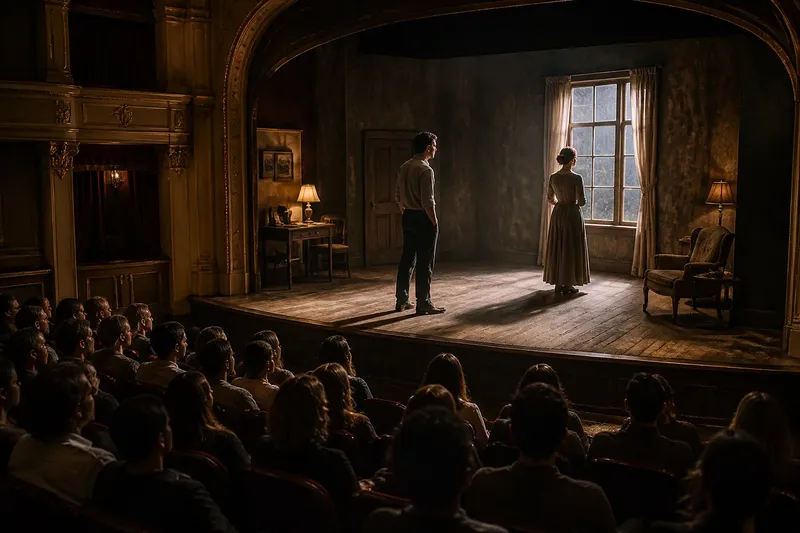
What should you do when a play says a character “crosses to the window” but never tells you why? A stage direction gives you a foothold, not a complete map. Read it as part of the play’s invitation: notice what it makes possible, then leave room for actors and directors to make the moment their own.
That distinction matters because a script is read in private, while a performance unfolds among people in a particular room. Directions can shape attention, rhythm, and interpretation without prescribing every movement. These five ways of reading them help you see both the guidance and the freedom on the page.
1. Separate the action from the reason behind it
A direction may name an action while leaving its motive open. “She sits” tells you something observable; it does not settle whether she is tired, defiant, cautious, or trying to keep someone from leaving. The uncertainty is not a gap you must repair before reading on. It may be the very space the scene needs.
Try asking what the action changes between characters. Does sitting lower the speaker’s status, create a pause, or make the other person stand alone? Those questions keep your reading tied to the scene rather than turning a brief direction into an invented backstory.
Imagine a scene in which a character sits after being asked a difficult question. You might first read the movement as retreat. A director could instead have the character sit with deliberate composure, making the silence feel like a refusal to be rushed. The same written action remains legible, while its visible attitude changes what the audience senses.
2. Treat stage directions as cues for attention
Some directions do more than arrange bodies. A pause can draw attention to what a character cannot say; a glance may shift the audience’s awareness toward an unspoken alliance. When you encounter one, ask not only, “What happens?” but also, “What should I notice now?” That question connects the instruction to its effect on the scene.
Look at the words around the direction. If a character stops before answering, the interruption may matter more than the precise length of the pause. If someone turns away during a confession, the turn can complicate the words without dictating a single emotion. The surrounding dialogue and the action work together; neither needs to carry the whole interpretation.
Onstage, a director might make a pause visible through stillness, or let a small practical action occupy it. An actor might hold another character’s gaze, or avoid it. What matters for a reader is recognizing the cue’s pressure and asking how different choices could preserve it.
3. Notice when a direction describes a result rather than a technique
A script may say that a room “falls silent” or that a character appears startled. Such wording points toward an audience-facing result, not necessarily the exact means of producing it. Silence might come from everyone freezing, from a sound fading away, or from the sudden absence of a familiar noise. The sentence tells you what the moment should register as; it need not dictate the machinery.
This is especially useful when a direction seems difficult to stage literally. Instead of deciding that the playwright has supplied a technical instruction, ask what the audience needs to perceive. The answer might be a change in attention, a feeling of interruption, or an altered relationship between characters. A production can pursue that effect using choices suited to its space and performers.
Some directions are plainly more specific than others, and a reader should not flatten that difference. A named entrance or exit can establish essential timing. A brief description of an emotional impression may offer more interpretive room. Notice the wording before deciding how firmly it fixes the event.
4. Read the direction alongside the play’s changing circumstances
The same gesture can mean something different as a scene develops. A character who repeatedly looks toward a door may seem merely distracted at first; later, the gesture might reveal fear, expectation, or a plan to leave. Reading directions in sequence lets you track whether a movement is repeated, altered, or dropped.
That pattern is more useful than assigning a permanent meaning to every action. Ask what has changed since the last time the direction appeared: who is present, what has been said, and what the character now risks. A repeated movement can gather significance without the script ever explaining it.
It also helps you distinguish a stage direction’s practical job from its interpretive possibilities. An entrance may simply bring a needed character into the scene, yet its timing can still affect the encounter. The script can establish the event while leaving the performer to discover how the character arrives.
5. Compare possible stagings without choosing a winner
When a direction leaves room, briefly imagine more than one staging. This is not an exercise in correcting the playwright. It is a way to see which parts of the moment are fixed and which are available for interpretation. Keep each possibility grounded in the actual words and circumstances of the play.
Say a direction has a character turn away before answering. One possible staging has the character turn toward a window, making the response feel evasive. Another has them turn toward the person who asked, making the answer feel newly direct. The invented starting point is the same written action, the action taken is a different choice of focus, and the observable result is a shift in how the answer lands. Neither version needs to cancel the direction.
There is little value in inventing elaborate lighting or elaborate movement for every short instruction. If a direction does its work clearly, let it. Save comparison for moments where the alternatives reveal something about tension, timing, or the audience’s attention.
Which stage directions leave room for interpretation?
Does a stage direction tell an actor exactly how to feel?
Usually, the action is more concrete than the emotion, even when the wording suggests a mood. Treat emotional language as a clue to the scene’s intended pressure, then consider how an actor might express it without assuming there is only one valid performance.
Should readers imagine every movement in a script?
No. Follow movements that affect relationships, timing, entrances, or audience attention, and let routine actions pass when they add little. A selective reading keeps the scene’s important choices in view.
Can a production change a stage direction?
A production may interpret a direction through different movement, sound, or use of space, but the script’s wording still matters to readers. Where a choice depends on the script’s requirements or production circumstances, the people responsible for the production decide how to handle it.
How can I tell whether a direction is essential?
Ask what would become unclear or lose its force if the action disappeared. If the scene’s timing, relationships, or basic event depends on it, the direction may be doing essential work; if several alternatives preserve that work, it may allow more freedom.
Let the script set the pressure, not every detail
A stage direction is most useful when it gives you something to notice without closing off everything you might imagine. Read the action precisely, attend to its effect on the scene, and stay curious about the choices a performance could make. That approach lets a script remain a living invitation: specific enough to guide the reading, open enough for artists to answer it.
When you return to a passage, keep one simple question nearby: what must the audience understand here, and what can the production discover for itself? That question makes stage directions easier to read without mistaking possibility for vagueness—or guidance for a blueprint.