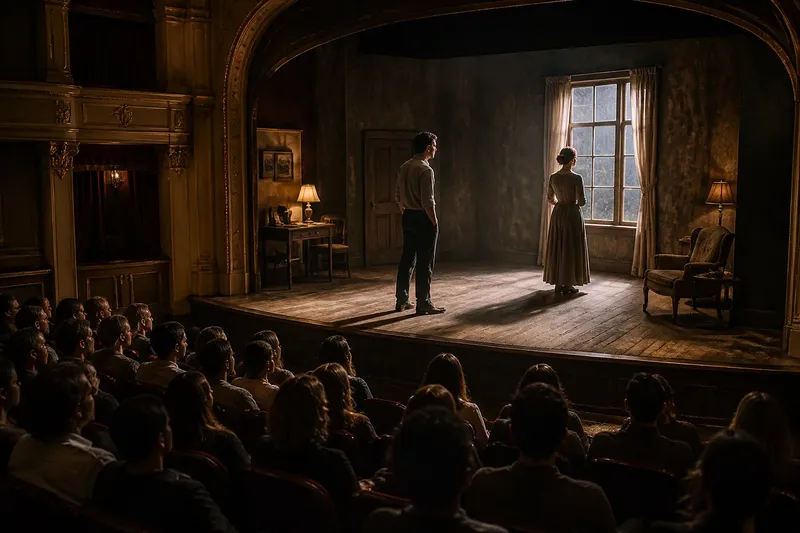
The Interval Myth: A Pause Does Not Explain the Play
Theatre interval questions can sharpen your attention without forcing a single reading. Use the pause to notice what the play has left unresolved.
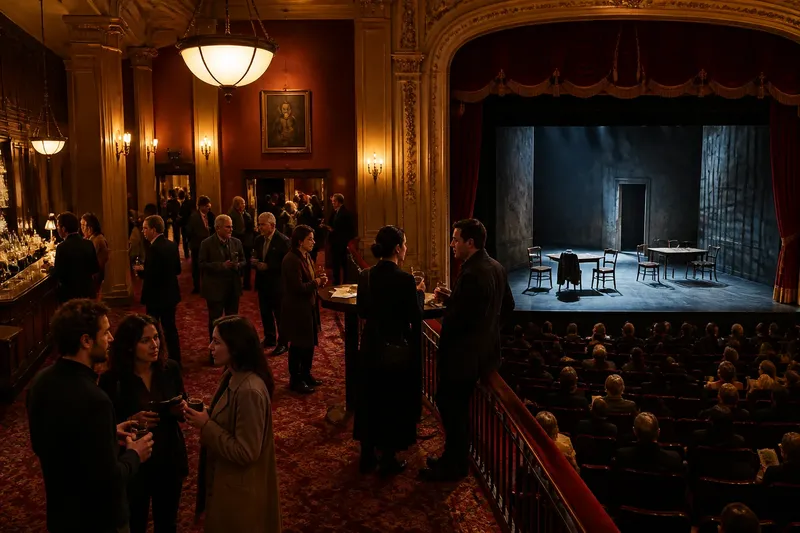
What should you think about during an interval? Theatre interval questions are more useful than hunting for the play’s one correct meaning. A pause can give you room to notice a shift, a contradiction, or a detail you might otherwise lose in the rush of the next scene. It cannot settle the play on your behalf.
That distinction matters because audiences often leave their seats looking for a verdict. Was the character sincere? Was the ending already set in motion? Did the production want us to admire, distrust, or pity someone? Those are lively questions, but answering them too quickly can close off the very tension the performance has built.
Try treating the interval as a small routine: arrive with attention, collect a few observations, and carry one open question back into the auditorium. The aim is not to decode the play before it resumes. It is to return better prepared to watch how the actors and stage picture complicate what you thought you knew.
Before the performance, make room for uncertainty
On the day of a performance, you do not need a reading list or a theory of the play. A little practical preparation can leave your attention free for what happens in the room. Check where the auditorium doors are, silence your phone, and settle in with enough time to notice the stage before the action begins.
If you already know the plot, resist turning that knowledge into a forecast. A familiar story can still surprise you through pacing, silence, gesture, or the way another character occupies the space. If you know nothing about the play, that is useful too: you can watch without trying to match each moment to a summary.
Before the lights change, choose a loose point of attention rather than a theory. You might follow how one character responds when another enters, or notice who gets to interrupt. This gives your mind somewhere to rest without making every detail serve a predetermined conclusion.
During the first half, gather observations rather than verdicts
As the play unfolds, distinguish between what you saw and what you think it means. “She stepped away before answering” is an observation. “She is afraid” is an interpretation. Both may matter, but keeping them separate lets you revise the interpretation if the scene gives you new information.
You do not need to take notes. If a moment stays with you, hold on to a plain detail: a pause before a reply, a chair left empty, a laugh that stops quickly, or an actor looking toward someone who has not spoken. These details are more useful in the interval than a vague impression that a scene felt strange.
Pay attention to changes as well. A character may sound confident in public and hesitate in private; another may stay silent while controlling the pace of a conversation. Instead of deciding what those choices mean at once, ask what changed in the room and who seemed to notice.
Say you watch a scene in which a daughter offers her father a coat, and he leaves it untouched on a chair. You might first read the gesture as rejection. At the interval, keep the observable detail—the coat remains between them—alongside that first thought; if he later reaches for it, the play has altered the question without making your earlier response foolish.
At the interval, let a question stay open
When the lights come up, give yourself a moment before reaching for a review or asking a companion what the play “means.” You can talk, stretch, visit the lobby, or get a drink. The point is not to turn the break into homework; it is to keep your own attention from being replaced by someone else’s explanation.
Ask one question that could be answered by watching the second half. A useful question is specific enough to guide your attention but open enough to admit more than one answer: “Will he accept the coat?” is concrete, while “Is he a bad person?” may flatten a more complicated relationship. You can also ask what evidence would change your mind.
Imagine you are watching a comedy in which a character’s jokes repeatedly interrupt difficult conversations. At the interval, you might wonder whether the laughter is helping the others avoid a subject or making the avoidance impossible to ignore. The second half can show which reading fits better—or make the distinction less tidy. Your question gives you a thread to follow, not a result to demand.
If you are with someone, compare observations before interpretations. “I noticed the sister stayed near the doorway” opens a conversation; “The sister is obviously guilty” may end one. A companion’s response can add a perspective, but neither of you needs to settle the issue before the bell or announcement calls you back.
There is no prize for remembering every line or decoding every symbol. Skip the effort of searching online for an explanation during a short break; spoilers and confident summaries can crowd out the performance you are about to see. If a question is still there when you return to your seat, that is enough.
In the second half, watch for the play’s answer and its resistance
When the performance resumes, carry your question lightly. Look for moments that support your first impression, but also notice what does not fit. An actor’s change in tone may make a line sound newly honest; a pause may leave its sincerity uncertain. The stage gives you evidence through behavior, timing, and the reactions around it, not just through what characters say about themselves.
Sometimes a play answers a question plainly. A character admits to a lie, or an action reveals a choice the earlier scenes kept hidden. Even then, the answer may not settle the larger issue. Knowing that someone lied does not automatically explain why, what the lie cost, or whether another character had already understood.
At other times, the production keeps competing readings alive. A smile might signal relief to one person and embarrassment to another; a character may speak tenderly while turning away. Resist treating ambiguity as a puzzle with a missing piece. A performance can make uncertainty part of the audience’s experience rather than a problem waiting to be solved.
Notice whether the production redirects your attention. A scene may begin with two people arguing, then make a third person’s stillness impossible to ignore. Sound, lighting, distance, and the arrangement of bodies can change what feels important without announcing an interpretation. You are not required to translate each choice into a symbol; simply notice how it shifts your focus.
After the applause, keep interpretation tied to what happened
Once you are outside, give the performance a little space before reaching for a polished opinion. You might tell a friend which moment stayed with you and what you noticed about it. A concrete recollection—“the answer came only after the other character had turned away”—is easier to discuss than a general claim that the play was about trust.
If you want to write something down, use three short prompts: What happened? What did I think it meant at the time? What later moment complicated that reading? The answers can fit in a phone note or a scrap of paper. This is not a review template; it is a way to remember how your response moved while you watched.
You can also keep the interval question unresolved for another day. A conversation on the walk home, a remembered gesture, or a second viewing may change what you make of the play. That does not mean your first response was wrong. It means your interpretation remains connected to the performance rather than frozen at the point where the break began.
Which interval questions help most?
Should I read the play’s synopsis during the interval?
If the plot has become hard to follow, a brief synopsis may orient you, but it can also reveal events that the second half is meant to disclose. Check the theater’s program or wait until after the performance if you would rather encounter those turns without advance explanation.
Is it rude to discuss the play during the break?
A quiet conversation in the lobby is a normal part of attending many performances, though people nearby may want a peaceful pause. Keep your voice low, avoid blocking doors and aisles, and leave the auditorium quiet when staff are bringing people back in.
What if I cannot remember a specific detail?
You do not need a perfect record. Start with the feeling that stayed with you and ask what you remember seeing or hearing just before it; even a partial detail can help you separate an observation from a guess.
Does an unresolved ending mean I missed the point?
Not necessarily. Some endings clarify a character’s action while leaving its meaning open, and others withhold information deliberately; describe what the performance made clear before deciding that uncertainty signals a gap in your understanding.
Let the pause sharpen attention, not close the case
The next time you attend a play, use theatre interval questions as a way to notice what remains in motion. Gather a detail in the first half, choose a question during the break, and watch for both the evidence and the complication when the action resumes. You may leave with a stronger interpretation, several possible ones, or a question that still feels alive. The interval has done its job if it helps you watch the rest of the play with care—not if it supplies the answer in advance.